CRM for E-commerce: Streamlining Customer Interactions for Online Success
Crm for e commerce - In the competitive landscape of e-commerce, CRM for E-commerce has emerged as a game-changer, empowering businesses to foster enduring customer relationships and drive profitability. By integrating customer data, automating workflows, and personalizing marketing campaigns, CRM empowers businesses to deliver exceptional customer experiences and achieve sustainable growth.
The benefits of implementing a CRM system for e-commerce businesses are multifaceted. It enables businesses to streamline operations, enhance customer service, and gain actionable insights into customer behavior. With its comprehensive suite of features, CRM empowers businesses to nurture customer loyalty, increase conversion rates, and maximize revenue potential.
Integration with E-commerce Platforms
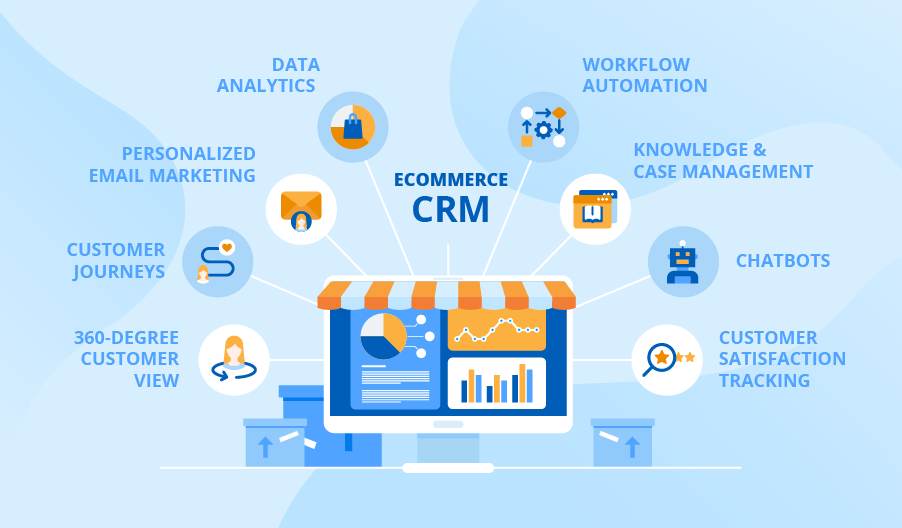
Integrating CRM and e-commerce platforms is crucial for businesses to streamline customer interactions, enhance data management, and personalize the customer experience.
Integrating CRM with platforms like Shopify, Magento, and WooCommerce allows businesses to:
Shopify Integration, Crm for e commerce
- Sync customer data, including order history, contact information, and preferences.
- Automate order processing and fulfillment, reducing manual errors and improving efficiency.
- Create targeted email campaigns based on customer behavior and purchase history.
Magento Integration
- Centralize customer data from multiple Magento stores, providing a comprehensive view of customer interactions.
- Automate lead generation and qualification, nurturing leads through personalized marketing campaigns.
- Track customer lifetime value (CLTV) and identify high-value customers for targeted outreach.
WooCommerce Integration
- Integrate seamlessly with WordPress-based e-commerce stores, extending CRM functionality to WooCommerce.
- Automate order fulfillment, inventory management, and customer communication.
- Provide personalized product recommendations and upselling opportunities based on customer purchase history.
Customer Segmentation and Targeting
Customer segmentation is the process of dividing customers into distinct groups based on shared characteristics. This allows businesses to tailor their marketing campaigns to each segment's specific needs and preferences.
In e-commerce, customer segmentation can be based on a variety of factors, including:
- Demographics (age, gender, income, location)
- Behavior (purchase history, website activity, email engagement)
- Preferences (product preferences, communication preferences)
CRM systems can help businesses manage customer segmentation and targeting by providing a centralized repository of customer data. This data can be used to create customer profiles, which include information about each customer's demographics, behavior, and preferences.
CRM systems can also be used to automate targeted marketing campaigns. For example, a business could create a targeted email campaign for customers who have purchased a specific product in the past. This campaign could offer a discount on a related product or provide information about a new product launch.
Benefits of Customer Segmentation and Targeting
- Increased marketing effectiveness
- Improved customer satisfaction
- Increased sales
Implementation and Best Practices: Crm For E Commerce
Implementing a CRM for e-commerce requires careful planning and execution. Here's a step-by-step guide to help you get started:
1. Define your goals and objectives. Determine what you want to achieve with your CRM, such as improving customer service, increasing sales, or personalizing marketing campaigns.
2. Choose the right CRM software. Consider your business needs, budget, and technical capabilities when selecting a CRM.
3. Integrate your CRM with your e-commerce platform. This will allow you to track customer data, such as purchase history, browsing behavior, and contact information.
4. Import your customer data. This includes data from your e-commerce platform, email marketing system, and any other sources.
5. Segment your customers. Divide your customers into different groups based on their demographics, interests, and behavior.
6. Personalize your marketing campaigns. Use your CRM to tailor your marketing campaigns to each customer segment.
7. Track your results and make adjustments. Monitor the performance of your CRM and make adjustments as needed to improve its effectiveness.
Best Practices for CRM Implementation and Optimization
- Use a CRM that is designed for e-commerce businesses.
- Integrate your CRM with all of your e-commerce systems.
- Keep your customer data clean and up-to-date.
- Segment your customers into different groups.
- Personalize your marketing campaigns to each customer segment.
- Track your results and make adjustments as needed.
Last Point
In conclusion, CRM for E-commerce has become an indispensable tool for businesses seeking to thrive in the digital age. By harnessing the power of customer data and leveraging automation, businesses can elevate customer experiences, drive sales, and build lasting relationships with their customers.
Embracing CRM is not merely an investment in technology; it's an investment in the future of your e-commerce business.

Posting Komentar untuk "CRM for E-commerce: Streamlining Customer Interactions for Online Success"